
Using goals in your writing
’tis the season for resolutions, and I’m going to use that as an excuse to write about one of the most powerful tools a creator can have: goals.
Proper use of goals can transform your creative life into something amazing. Improper use can squeegee all joy from your life.
If you’ve never worked with goals before, start small. For your next writing session, set yourself a couple goals that you know you can hit. Finish the chapter is a pretty traditional goal, but if that stresses you out, go with nail this scene, solve this character problem, or even write the first page.
When you hit your goal, celebrate it. Even if it’s as small as eating a cookie, take a moment to feel the accomplishment. Stacking accomplishments (which I’ll write about next week) is one of the best things you can do to arm yourself for battle. For now, though, just trust me. Celebrate your accomplishments. Feel them. Acknowledge that you did a cool thing.
If the goal you set was too small, you’ll immediately recognize that. If you’re like me, halfway through your cookie, you’ll start feeling a little guilty. The “okay, that was lame” thoughts will intrude. That’s okay. Finish the celebration and calibrate your next goal.
If the goal you set as too big, you’ll recognize that, too. How? It’ll stress you out. You’ll start to feel the joy of creating slip away. If that happens, immediately stop. Set that goal aside and make a smaller one. There’s no shame in recognizing that a goal needs to be discarded.
Did you catch the most important detail in those two paragraphs? It’s that you control your goals, and not the other way around. If they’re not working for you, make changes. Try new things. Maybe you like negative goals, like I shall not open YouTube during this writing session. There’s no right and wrong here. Do the thing that works for you.
Having said that, let me break down some of the advantages and dangers, so you can tailor your goals appropriately.
Advantage #1: Focus
A typical writing session for me used to go something like this:
- Start writing.
- Discover a thing I need to research – language, craft, fighting style, whatever.
- Spend the rest of my writing time researching that thing.
The writing sessions would slide by without me accomplishing anything tangible, and the lack of progress felt horrible. There’s only so much consolation I can get out of thinking, “yeah, but now I know so much more.”
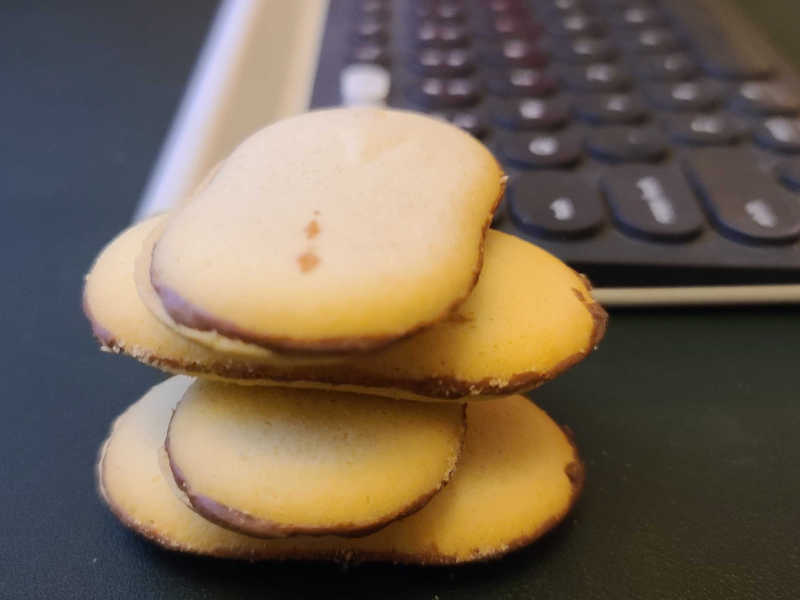
Once I started setting myself goals (in the form of a stack of cookies next to the keyboard), I was able to self-correct much better. I still get distracted, but it’s for shorter periods of time. Seeing that stack of cookies is a pleasant reminder that I have goals I want to accomplish.
Being aware of the goal turned out to be important for me. I found that I need some tangible reminder of the goal, and that the reminder needs to be something that makes me smile. Writing “Do this, you idiot!” on a post-it note was not effective for me, though it did inspire me to create some interesting expletives.
Advantage #2: Celebrations!
Hitting a goal feels good. When you hit them, celebrate. Whether your celebration is a cookie, a sip of wine, or a primal dance, make it something you enjoy. For a while, I went with an understated nod at Sara, the dog. I still do that occasionally, but, generally speaking I like something bigger.
The bigger the goal, the bigger the celebration. When you publish a book, throw yourself a party. Don’t make it a marketing event, either. I mean, you can do that, sure, but you want a celebration that you enjoy.
Your celebrations should be tangible and undeniable. In the darkest dark of night, when those “I’m never going to finish” thoughts start to intrude, you need to be able to remember that cookie.
Danger #1: Depression
The cold hard truth is that you’re not going to hit every goal you set for yourself. Nobody does. Missing a goal feels bad, and it should.
The danger arrives with how you handle those feelings. I coached youth soccer for 15 years, and saw all sorts of different reactions to losses. Some kids couldn’t stop crying. Others became angry. Others focused on the referees or on how the other team played.
A missed writing goal doesn’t hurt any less than a lost soccer game. Depending on the size of the goal, it might hurt more.
Starting with small goals helps you calibrate yourself. There are days when I don’t finish that page or chapter or whatever. Do I rage at my wife for interrupting me? Of course not. Do I stomp around the house glaring at random furniture? Sometimes.
Learning how to deal with small misses helps you figure yourself out, so you can roll with the bigger missed goals.
If you’re still worried about being disappointed, here’s a strategy that works for me. When I miss a goal (regardless of size), I do an honest analysis of why. Did I get distracted by YouTube? If so, what can I do to stop that from happening next time? Maybe the goal was unrealistic, or I was interrupted too many times, or I fell asleep at the keyboard. Whatever it is, analyzing the miss helps me take control of it. Yes, I’m still upset by it, but owning it puts me back in charge.
In software development, we call that process a retrospective.
Danger #2: Oppression
My creative juices tend to run dry when I’m feeling forced. Don’t put too much stock in the goals you set. If they’re waking you up at night, or interfering with your process in any way, dial them back.
I recommend being a little paranoid with this one. It’s easy for goals to creep up on you, to the point where you find yourself feeling anxious for no understandable reason. If you feel even slightly oppressed, shoot for a smaller goal that’s more fun. Get creative, and have fun with it.
Ready to get a little more advanced?
Once you’re comfortable with little goals, consider larger ones. Finish the page might become finish the chapter, which might lead to publish the book. The best strategy with larger goals is to create smaller goals that support them. For example one of my 2025 resolutions was to publish Emil. My supporting goals included things like do a character edit for Danny’s mom and find an illustrator.
In software development, we call these smaller goals milestones. If it’s possible (and not too stressful) for you to assign target dates for them, that can be helpful. Having dates lets you look at your milestones and evaluate where you are on your long-term goal.
That’s a wrap!
If your goal was finish reading Pat’s incredibly long post, congratulations. You made it. Go get yourself a cookie.
I hope this has been helpful for you. As always, let me know what you think! I’d love to hear how you use goals (or milestones or resolutions) in your creative process.
Want to comment? Hit me up on Threads or Facebook!